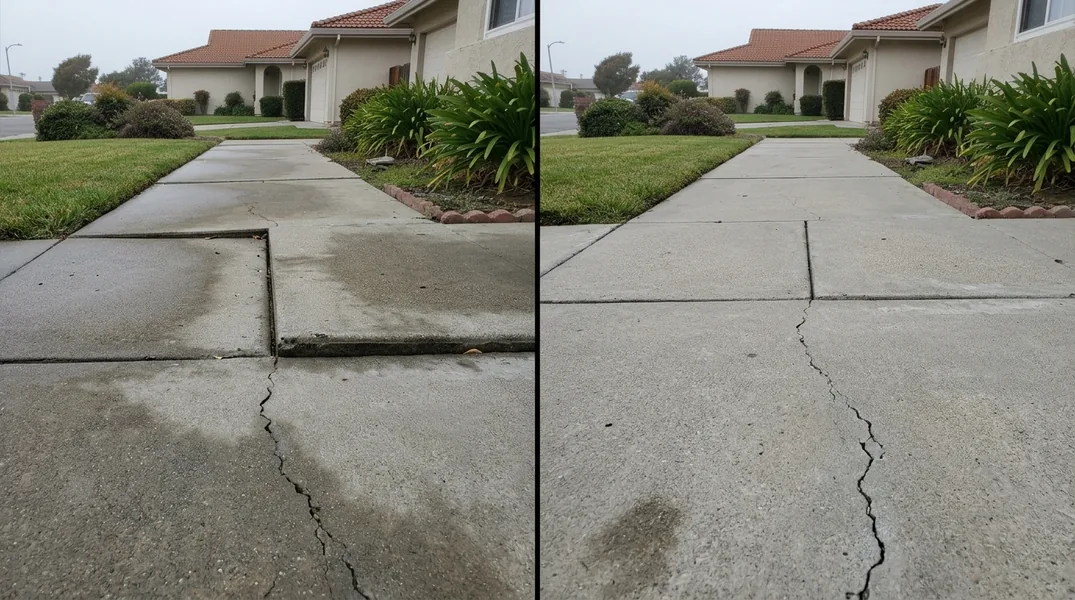
Understanding Salinas Valley Clay Loam Soil
If you own a home in Salinas, you've likely noticed something peculiar about the ground beneath your feet. The soil here isn't your typical sandy loam or rocky terrain found in other parts of California. Instead, the Salinas Valley is dominated by clay loam, a dense mixture of clay particles, silt, and sand that creates both fertility for agriculture and significant challenges for concrete structures.
Clay loam soil has a unique property: it expands when wet and contracts when dry. This expansion and contraction cycle is relatively minor in arid climates, but in the Salinas Valley, where winter rains are substantial and the wet season lasts several months, the ground beneath your Concrete Driveways is constantly shifting. When clay absorbs moisture, its particles swell, pushing upward on whatever sits on top of it. When the dry season arrives and the soil loses that moisture, it shrinks, creating voids and allowing concrete slabs to settle unevenly. This is why homeowners in Salinas frequently experience cracked, sunken, or heaving driveways that seem to appear overnight.
How Winter Rain Destabilizes Your Concrete Slab
The Salinas Valley experiences a Mediterranean climate with most precipitation falling between November and March. During these months, the region can receive 10 to 15 inches of rain, and while that might not sound extreme compared to other parts of the country, the concentrated timing and the clay soil composition create a perfect storm for concrete damage. When heavy rains saturate the clay loam beneath your driveway, the soil doesn't drain quickly like sandy soil would. Instead, water remains trapped in the clay matrix, causing prolonged expansion that exerts tremendous pressure on the concrete slab above.
This sustained pressure leads to what homeowners call a sinking driveway, though the technical term is differential settling. One section of your driveway may sink while an adjacent section remains stable, creating lips, cracks, and an uneven surface that's both unsightly and hazardous. The problem is particularly acute if your driveway was installed without proper drainage considerations or if the subbase beneath the concrete has deteriorated over time. Even well-constructed driveways can suffer from settling concrete slab issues in winter rain conditions because the soil itself is the variable that homeowners can't control.
Why Settling Concrete Becomes a Safety and Aesthetic Problem
A sunken or unevenly settled driveway isn't just an eyesore. Tripping hazards created by lips and cracks pose a genuine safety risk to you, your family, and guests. Additionally, water pooling in low spots on your driveway accelerates deterioration, as freeze-thaw cycles in winter cause water to expand when it freezes, widening cracks and deepening damage. Over time, what begins as minor settling can develop into major structural issues requiring expensive repairs or complete replacement.
The aesthetic impact matters too. Your driveway is one of the first things visitors and passersby notice about your home. A cracked, sunken, or heaving driveway suggests poor maintenance and can affect your home's curb appeal and resale value. Many homeowners in the Salinas Valley put off addressing settling concrete because they assume the problem will simply continue to worsen with the next rainy season. In reality, professional Concrete Repair & Resurfacing solutions can stabilize your driveway and prevent future damage with the right approach tailored to local soil conditions.
Concrete Repair in Salinas: Addressing Settlement Before It Worsens
If your driveway is already showing signs of settling, cracking, or heaving, the key is to act before the damage becomes severe. Concrete Repair & Resurfacing professionals in the Salinas area have several proven methods to address settlement issues caused by clay soil and winter moisture. One effective solution is mudjacking (also called slab jacking), where a slurry is injected beneath the sunken concrete to lift it back to its original level and fill voids in the subbase. This method is less invasive than complete replacement and can extend the life of your driveway by many years.
Another approach involves removing the damaged section of concrete and rebuilding it with improved drainage and subbase preparation. Modern installations account for Salinas Valley soil conditions by using thicker slabs, reinforced steel, and permeable subbase materials that allow water to drain more effectively. Resurfacing is also an option if the structural damage is limited to the top layer. The choice of repair method depends on the extent of damage, the age of your driveway, and your budget. Calling a local expert who understands the specific challenges of clay loam soil and seasonal rainfall patterns ensures you get a solution designed to last, not just a temporary patch.
Prevention Strategies for New Driveways and Existing Ones
If you're planning a new Concrete Driveways installation in Salinas, prevention starts at the design and construction phase. A durable driveway in clay loam soil requires a robust subbase (typically 4 to 6 inches of compacted gravel or recycled asphalt), proper slope for water runoff, and sometimes a moisture barrier to reduce water infiltration into the clay below. The concrete itself should be properly reinforced and sealed to protect against moisture penetration and freeze-thaw damage. Working with contractors experienced in Salinas Valley conditions ensures these details are handled correctly from the start.
For existing driveways, maintenance is your best defense against accelerating settlement. Keep your driveway sealed to reduce water penetration, and ensure water drains away from the slab rather than pooling on it. Grade your landscape so that surface water runs off rather than accumulating near the edges of your driveway. During the rainy season, monitor your driveway for new cracks or signs of movement, and address them promptly before they worsen. If you notice settling, heaving, or significant cracking, contact a professional for an inspection rather than waiting to see if the problem resolves on its own. In the Salinas Valley climate, it typically won't.
When to Call a Professional for Concrete Repair Near Me
Determining whether your driveway needs professional attention or can wait requires understanding the severity of the damage. Minor surface cracks (hairline fractures less than 1/8 inch wide) can sometimes be sealed as preventive maintenance. However, cracks wider than 1/4 inch, visible settling, heaving, spalling, or areas where water pools are all signs that professional evaluation is needed. The longer you wait, the more expensive repairs become, as damage spreads and the underlying soil issues worsen with each winter rain cycle.
Salinas Concrete Pros specializes in diagnosing and repairing concrete damage caused by local soil and climate conditions. If you're concerned about your driveway, we offer a free inspection and free estimate so you can understand your options and budget accordingly. Call us at (831) 208-2993 to schedule an appointment. Our team understands the unique challenges of clay loam soil, seasonal moisture fluctuations, and the specific needs of Salinas Valley homeowners. We'll recommend the most cost-effective solution to restore your driveway's safety, appearance, and longevity.
Looking for a professional concrete contractor in Salinas? Salinas Concrete Pros responds fast for all your concrete needs.
Get a Free QuoteOur services: Concrete Driveways · Concrete Patios · Stamped & Decorative Concrete